Touchgrind BMX 3: Rivals
- 3.5
- Rating
- 1.00M
- Installs
- Free
- Price
 Analysis by App-foxy
I expected Touchgrind BMX 3: Rivals to be a quick distraction, the kind of sports game that feels exciting for a few minutes and then gets forgotten. After spending time with it, I found something more specific: a touch-controlled BMX game built around precision, repetition, and the satisfaction of finally landing a trick that looked impossible a moment earlier. It is free to start, rated for Everyone, and comes from Illusion Labs, but its real appeal is not the basic fact that you can ride a virtual bike. The appeal is how much control the game asks from your fingers.
The first session is easy to understand but not necessarily easy to master. You guide the bike, build momentum, launch from ramps, rotate in the air, and try to land cleanly. That sounds familiar if you have played other mobile sports games, yet the handling makes this feel closer to a small skill toy than a traditional racing game. I was constantly making tiny corrections instead of simply choosing a direction and watching an automated animation play out.
That distinction matters when deciding whether to install it. If you want a relaxed BMX experience where progress arrives quickly, this may feel demanding. If you enjoy learning a physical control system and repeating a short section until your hands understand it, the first week can be surprisingly absorbing. My early impression was positive, though I could also see the central risk immediately: the same precision that creates satisfaction can become tiring when every failed attempt starts to feel like a test of patience rather than a fun challenge.
You May Also Like

 Google Keep - Notes and lists
Google Keep’s Quiet Growth Shows the Appeal of Simpler Notes
As mobile work gets busier, Google Keep keeps winning a simple contest: capture a thought quickly, find it later, and get on with the day.

 Blood Strike: 2.5 Anniversary
Blood Strike’s Loadouts Turn Every Drop Into a Tactical Gamble
A close look at Blood Strike’s custom loadouts: how fast access to signature weapons reshapes its battle royale rhythm, rewards preparation, and narrows the gap between fights.

 Pandora - Music & Podcasts
Pandora’s Music Is Easy to Start, but Harder to Recover
Pandora’s strength is its low-effort path from a seed to a station. Its weak spot is how much confidence it asks you to place in connection, setup, and quiet recovery.

 8 Ball Pool
 Is Built on Rivalries, Rematches, and Routine
A close look at the rivalries, rematches, shared routines, and unanswered safety questions that turn a quick pool match into a persistent mobile community.

 Samsung Music
’s Quiet Strength Is Playing What You Already Own
Its reach comes less from spectacle than from dependable access to a personal library. That simplicity is both the app’s strongest retention engine and its ceiling.

 AccuWeather: Weather Radar
AccuWeather Review: A Quick, Clear Forecast for Everyday Decisions
For everyday plans, the best forecast is the one you can understand quickly. AccuWeather makes rain timing, radar, and local conditions easy to act on, with a few trade-offs.
More From Our News Desk



How the riding feels after the first few sessions
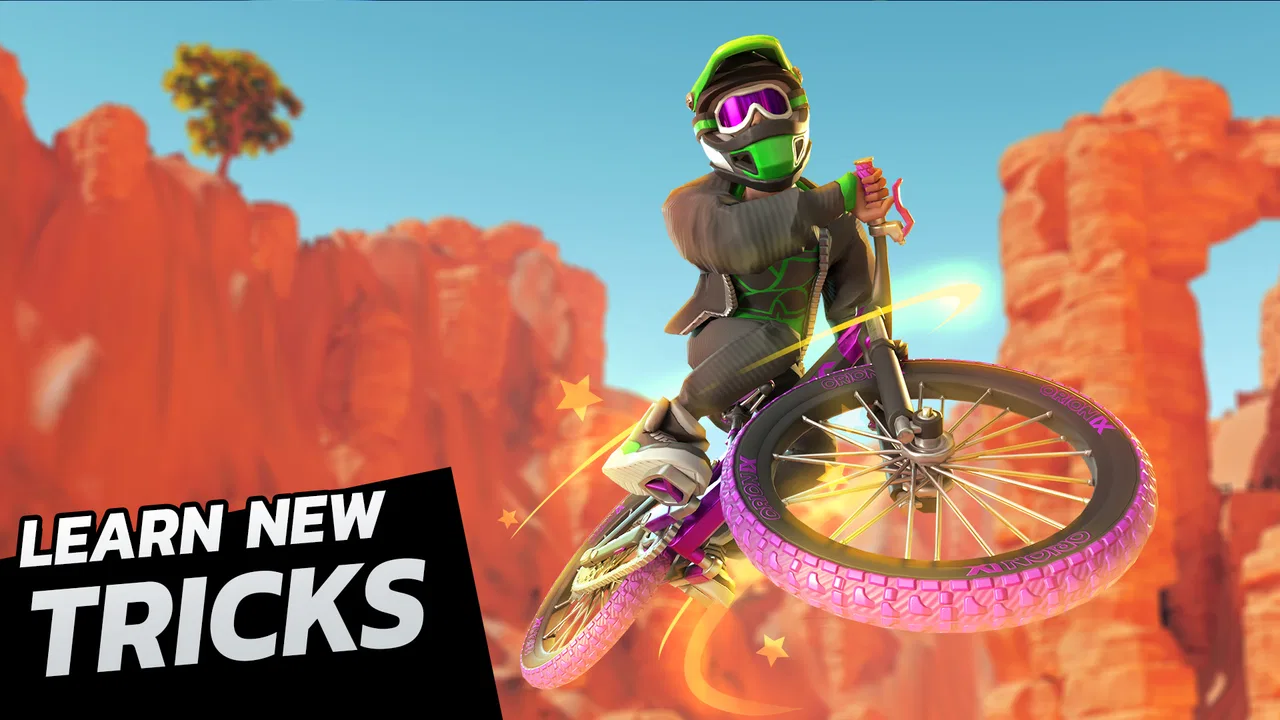
The strongest part of the game is its touch-first design. Instead of treating the screen as a collection of buttons, it asks me to use gestures and finger placement as part of the riding itself. That makes tricks feel personal. When a jump goes wrong, I usually know that I mistimed a movement, over-rotated, or failed to prepare for the landing. The result is more rewarding than a simple tap-to-perform system, because success feels connected to my input.
The game also works well in short bursts. A typical session can fit into a spare moment while waiting for a bus, taking a break, or sitting somewhere with only a few minutes to fill. I can attempt a difficult sequence, learn one small detail, and put the phone down without needing a long uninterrupted campaign. That makes it a better everyday companion than many sports games that depend on extended races or lengthy matches.
One useful habit is to treat each failed run as practice rather than immediately restarting in frustration. I found that watching the bike through the landing phase taught me more than focusing only on the trick itself. A rotation that looks correct in midair can still fail because the wheels are not aligned for the surface. In practical terms, I learned to prepare for the landing earlier than felt natural. This is one of the game’s less obvious strengths: it rewards anticipation, not just dramatic movement.
Another tip is to make small changes between attempts. Repeating the exact same gesture with more force rarely solves a problem. Adjusting the timing, reducing the movement, or beginning the rotation slightly earlier often works better. This gives the game a training-like quality. I was not merely collecting successful animations; I was building a mental map of how the bike responds to touch.
The presentation supports that focused style without getting in the way. I never felt that the interface was trying to turn the game into a complicated management simulator. The core activity remains riding and performing. For a player who likes sports games because of direct control rather than team building, card collecting, or constant menu navigation, that focus is welcome.
There is also a useful difference between playing for a clean run and playing for a spectacular trick. A flashy attempt may produce a memorable moment, but a controlled landing is usually the better measure of progress. I recommend learning the safest route through a challenge first, then experimenting with more ambitious movements. That approach reduces wasted attempts and helps reveal whether the game’s difficulty feels motivating or simply repetitive for you.
Who gets the most from the first week
I would point the game toward players who enjoy skill-based mobile controls, stunt sports, and games that improve through repetition. It is especially suitable for someone who likes the feeling of shaving away mistakes one at a time. The BMX theme gives the practice a clear identity, while the touch controls keep the experience more involved than an ordinary arcade racer.
It is less suitable for a child or casual player who expects every attempt to produce an entertaining result. The Everyone age rating makes it broadly approachable, but age suitability is not the same as difficulty suitability. Younger players may understand the objective quickly while still finding the precision frustrating. Likewise, anyone looking for a calm game to play without concentration may prefer a simpler arcade title.
Because it is free, trying it costs nothing upfront. That makes the first-week experiment straightforward: install it, learn the controls, and decide whether the repeated attempts feel satisfying before spending anything. The game includes in-app purchases ranging from under a dollar to amounts close to a hundred dollars per item, so I would recommend setting a personal spending boundary before getting deeply invested. The free entry is attractive, but the long-term value depends on whether the core riding remains enjoyable without turning every desired improvement into a purchase decision.
What keeps it useful after the novelty fades
The month-to-month question is more difficult than the first-week question. The initial novelty comes from discovering what the bike can do with touch controls. Once that discovery period ends, the game needs to provide a reason to return. For me, that reason is not a story or a social routine. It is the pursuit of cleaner execution and the chance to improve at sections that once felt out of reach.
That kind of recurring value is real, but it is narrow. Players who naturally enjoy mastery games can return for weeks because every session offers a small technical goal: land more consistently, connect movements more smoothly, or stop making the same mistake. Players who need frequent new content, changing objectives, or a strong sense of progression may lose interest sooner. The game’s lasting appeal depends heavily on whether improving your own performance feels like enough content.
I found it helpful to create personal practice goals instead of opening the game with a vague expectation of “doing better.” One session can focus on landing accuracy. Another can focus on a single type of rotation. A third can be about completing a route without taking unnecessary risks. This turns short play sessions into deliberate practice and prevents the experience from becoming an endless cycle of random retries.
A realistic everyday scenario shows where the game fits best. Imagine having ten minutes before an appointment. You can open it, attempt a familiar challenge, and concentrate on one troublesome landing. If the attempt fails, the session still has a purpose because you have identified what needs adjustment. That is a better use of a short break than a game that requires a long buildup before anything meaningful happens. On the other hand, if you are commuting in a situation where your attention is divided, the precision may make it a poor choice. It rewards focus, not half-attention.
The game’s current version is 2.2.2, and it has reached over a million installs, which suggests that the concept has found a sizeable audience. Its average rating is 3.7 from roughly ten thousand ratings, with a little over two hundred written reviews. I read that overall reception as mixed but respectable rather than universally enthusiastic. It fits my experience: the control idea is distinctive and rewarding, but the same design can expose players to repetition, difficulty spikes, and frustration.
Compared with a conventional BMX or extreme-sports game built around automatic tricks, this one offers more ownership over the result. A traditional arcade alternative may be better when I want immediate spectacle, forgiving controls, and fast rewards. A console-style sports game may offer broader progression and more varied activities. This title is strongest in the middle ground: more tactile than a casual stunt game, but more focused and compact than a large sports simulation.
That comparison also explains why it may not become a permanent part of everyone’s routine. I can imagine returning regularly when I am in the mood to practice, but I would not recommend it as the only game on a phone. Its recurring value is best alongside other genres. When I want a game that respects a short session and gives me a precise challenge, it has a clear role. When I want variety without repetition, I would choose something else.
The maintenance is mostly mental, not mechanical
There is no complicated setup to maintain, and the game does not demand that I manage a large roster, a long inventory, or a daily administrative routine. That is a genuine advantage. I can return after several days and get back to riding without remembering a complicated system of resources and menus. The main maintenance burden is keeping my touch habits consistent.
Because the controls are sensitive, a player who takes a long break may need a few attempts to recover the right timing. I noticed that rushing back into the hardest challenge after time away was counterproductive. A better routine is to spend the first few minutes on a familiar section, using it as a warm-up. This is a small but important trade-off: the game is easy to reopen, yet not always instantly easy to play at your previous level.
Phone comfort can matter as well. Precise gestures are easier when I hold the device securely and keep my fingers from covering the most useful view of the action. On a small screen, the experience can feel more intimate but also more cramped. On a larger device, the movement is easier to observe, though holding it for repeated attempts may become less comfortable. I would not choose this as a hands-free game; the physical way you hold the phone directly affects the experience.
Spending discipline is another part of maintenance. Since optional purchases can reach a high individual amount, I would avoid buying anything impulsively after a frustrating run. The best test is whether the free riding loop already feels satisfying. If it does, any purchase should be considered an optional convenience rather than a rescue for a control system you do not enjoy. If the basic loop feels tiring, spending more is unlikely to solve the underlying problem.
Where fatigue begins
The first source of fatigue is repetition without a clear personal objective. If I keep restarting the same section while hoping the next attempt will somehow work, the game quickly feels less like sport and more like a chore. The solution is not necessarily more content; it is a more deliberate approach. I need to know what I am practicing and recognize when a session has stopped being productive.
The second source is the gap between understanding a trick and executing it. I may know exactly what should happen, yet the bike still fails to land because my timing is slightly off. That gap is satisfying for some players and exhausting for others. The game does not remove the awkward learning stage, and I consider that honest design rather than a flaw, but it means patience is part of the price of admission.
There is also fatigue from chasing spectacle when consistency would be more useful. Ambitious attempts look attractive, but they can hide weak fundamentals. I got better results by treating a clean landing as a victory even when the trick itself was not impressive. That mindset makes the game last longer because progress becomes visible in smaller steps.
Players who dislike free-to-play pressure should pay attention to how they feel around the purchase options. The game is free to download, but optional items priced from $0.99 to $99.99 can change the atmosphere for someone who is easily tempted. I would recommend trying the game with a fixed no-spend period first. That gives enough time to judge the controls and the repeat value on their own terms.
Another limitation is that this is not a substitute for real BMX riding, coaching, or physical activity. It captures the timing and visual drama of tricks, but it cannot provide the balance, risk awareness, or physical feedback of a real bike. That may sound obvious, yet it matters when choosing it for a sports-minded player. This is a precision game with a BMX theme, not a training tool for riding outdoors.
My long-term verdict on keeping it installed
After the initial excitement settles, I think Touchgrind BMX 3: Rivals earns lasting space for a particular kind of player rather than for everyone. Its best quality is the direct relationship between touch input and outcome. When I succeed, I feel that I learned something about the controls. That connection gives the game more depth than its short sessions might suggest.
Its weakness is equally clear: the same focused design can narrow the experience over time. If you need constant novelty, a broad career mode, or a relaxed way to watch tricks unfold, you may decide that the game has shown you everything you wanted after the first few sessions. It is also not ideal for distracted play, because careful timing matters and casual tapping usually produces disappointing results.
For me, the game works best as a compact skill challenge I can revisit rather than as a daily obligation. I would keep it installed for those moments when I want ten focused minutes, especially if I am in the mood to improve one specific movement. I would not build a whole mobile gaming routine around it, and I would be cautious about purchases until the free experience has proved its staying power.
Illusion Labs has made a BMX game that feels tactile instead of disposable. The free price makes it easy to test, the Everyone rating keeps it broadly accessible, and the sports focus is clear without being buried under management systems. But its value is earned through practice. The lasting appeal comes from mastery, not endless novelty. If that sounds like the kind of challenge you enjoy, this is worth trying. If you want instant rewards and variety with little repetition, it is better treated as a brief experiment than a permanent favorite.
FAQs for Touchgrind BMX 3: Rivals
01What devices are compatible with Touchgrind BMX 3: Rivals?
Touchgrind BMX 3: Rivals is compatible with both Android and iOS devices. It requires Android 5.0 or later and iOS 11.0 or later. The game performs best on devices with higher processing power for smoother gameplay and graphics. It’s advisable to check the app store for any specific device requirements before downloading.
02Is Touchgrind BMX 3: Rivals free to play?
Yes, Touchgrind BMX 3: Rivals is free to download and play. However, it offers in-app purchases that can enhance the gaming experience. These purchases might include new bikes, customization options, or additional levels. Users can still enjoy the core features of the game without making any purchases.
03Does Touchgrind BMX 3: Rivals require an internet connection?
Touchgrind BMX 3: Rivals can be played offline, allowing you to enjoy the game without an internet connection. However, some features, such as leaderboards and multiplayer modes, require an active internet connection to function properly. This ensures you have the best experience competing with friends or other players online.
04What are the main features of Touchgrind BMX 3: Rivals?
Touchgrind BMX 3: Rivals offers a variety of features including realistic physics, customizable bikes, multiple challenging levels, and stunning graphics. Players can perform tricks and stunts while competing in events against others. The game also allows you to replay your best stunts and share them with friends, enhancing the competitive aspect.
05How do the controls work in Touchgrind BMX 3: Rivals?
The controls in Touchgrind BMX 3: Rivals are designed to be intuitive, using a two-finger control system. One finger controls the direction of the bike, while the other manages tricks and stunts. This setup allows for a realistic and immersive BMX experience. It might take a little practice to master, but it adds depth to the gameplay.
Pros
- Stunning graphics enhance the immersive experience.
- Responsive controls make gameplay smooth and fun.
- Wide variety of bikes and customization options.
- Challenging levels keep players engaged.
- Regular updates bring new content and improvements.
Cons
- In-app purchases can be quite expensive.
- Requires a stable internet connection to play.
- Steep learning curve for beginners.
- Occasional bugs can disrupt gameplay.
- Limited offline play options.

Touchgrind BMX 3: Rivals
Gallery